Who orders custom plush
Custom plush is not only for toy brands. We see requests from museums and zoos that want their own animal, from football and sports clubs, from companies that want a mascot for family days, from schools and nurseries, and from online sellers who want a product nobody else has. Each of them needs the same steps, but the right size, finish and quantity differ.
1. Write a usable brief
A factory can only sample what it understands. A good brief contains:
- front, side and back views of the character, even as simple sketches;
- target height in cm, sitting or standing;
- colours as Pantone references where possible;
- the details that matter most: face, logo, clothing, accessories;
- intended age group and use: toy for children, collectors’ item, keychain, giveaway;
- the target price range and quantity;
- packaging: polybag, swing tag, gift box, window box.
You must own the design or have the right to use it. We do not reproduce licensed characters or third-party brands, and factories will ask for proof of rights for known characters.
2. Choose materials and details
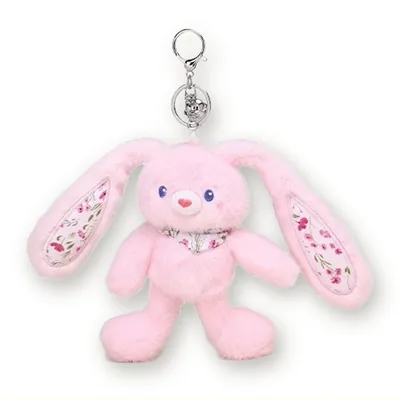
Most plush is made from polyester fabrics such as short-pile velboa, minky, crystal super-soft or longer faux fur, filled with PP cotton. Details can be embroidered, printed or appliquéd. For a toy intended for young children, embroidered eyes and noses are the usual choice instead of plastic safety eyes, because they cannot detach. Accessories such as hats, scarves and T-shirts can be sewn on or removable; removable parts change the safety assessment.
| Detail | Common options | What to consider |
|---|---|---|
| Eyes and nose | Embroidery, safety eyes, printed | Embroidery for young children; safety eyes need torque and tension tests |
| Logo | Embroidery, heat transfer, screen print | Embroidery reads well from 3–4 cm; fine lines need print |
| Clothing | Sewn-on T-shirt or hoodie, removable outfit | Removable parts must not create small parts or cords |
| Filling | PP cotton, sometimes with pellets | Pellets need an inner bag and seam checks |
| Attachments | Keychain ring, ball chain, clip | Keychains are often not toys and need correct age labelling |
3. Sample before production
Every custom design starts with a sample or prototype. The factory makes a pattern and the first piece, usually in 7–14 days plus the design rounds you need. Expect one to three rounds: proportions and face expression are where most changes happen. Look at the sample from a distance, as a customer on the shop floor would, and up close for stitching and symmetry.
Approve one sample in writing and keep it. It becomes the reference for production and for inspection. Our samples page explains how sample costs are credited against the order.
4. Minimums and price drivers
The minimum is set per design and shown on each product page in our custom plush category; it is often 100–500 pieces. What drives the price:
- size and pile type: a 60 cm long-pile bear uses several times the fabric of a 20 cm short-pile one;
- number of colours and fabric pieces;
- amount of embroidery and number of logo positions;
- accessories and clothing;
- packaging and swing tags;
- testing, if no valid report exists for the design.
Embroidery programs and print set-up are usually one-off costs per design. A higher quantity spreads them and lowers the unit price.
5. Safety checks for plush
A custom plush toy for children is a toy under the Toy Safety Directive 2009/48/EC, even when it is given away at an event. It needs the conformity assessment, the CE marking, warnings, and your details as brand owner or importer on the label. The EN 71 parts that usually apply to plush are:
- EN 71-1 mechanical and physical properties: seam strength, eyes and noses under torque and tension, small parts, cords and ribbons;
- EN 71-2 flammability of the fabrics and filling;
- EN 71-3 migration of certain elements from fabrics, prints and accessories.
REACH restrictions also apply to textiles and prints, for example azo dyes. We request REACH declarations or test reports from the manufacturer where the material requires it.
Because a custom design is new, there is usually no existing report. If no valid report exists for the design, we arrange testing in an accredited laboratory before shipment, at your cost, quoted in advance. Plan it in: testing runs after the production sample is approved and before the goods ship.
6. Labels and packaging
Each plush toy needs a sewn-in label with the CE marking, your name and address, the batch or type number and any warnings. Swing tags carry the brand, the age grade and the barcode. For Christmas and promotional orders, add the warnings in every language of the countries where the toy will be given away or sold.
7. Production and timing
Production for custom plush typically takes 25–45 days after sample approval, followed by inspection and transport to Poland in 25–45 days by rail or sea, or 7–12 days by air for small urgent orders. For Christmas, confirm the design by about May–June so that sampling and testing fit before production. For an event date, count back from the event and add a buffer for one extra sample round.
Plush mascot or PVC figure?
Not every mascot needs to be soft. PVC and vinyl figures hold fine detail and suit collectors and desks; plush suits children and gifts. Both start from the same character sheet. For full-size mascots for events, our sister brand MascotiQ works on custom mascots from the same character sheet.
Ready to start? Send us your sketch, target size and quantity, and we come back with options within 2 working days.