1. Start from your channel and your season
An independent toy shop needs breadth in small quantities. A retail chain needs a promotion range in fixed volumes for a fixed week. An online seller needs a handful of products under one brand, with listings that meet marketplace rules. A museum shop needs themed items that sell all year. Write down the retail price you aim for, the quantity you can sell, and the countries you sell in.
Then look at the calendar. Christmas is the largest toy season, and retailers usually confirm orders around April–June so that goods arrive in September–October. Summer ranges such as sand and water toys are ordered around November–February. Our how it works page shows the order dates that follow from this.
2. Decide what you will not import
Some toy categories carry far more risk and paperwork than others. Before you search for suppliers, decide which ones you leave out. In our own catalogue we deliberately exclude:
- toys with small parts intended for children under 3;
- toys with small magnets or button and coin batteries;
- remote-control and rechargeable electronic toys;
- projectile toys, toy weapons, chemistry sets, slime and crystal-growing kits;
- licensed characters and third-party brands.
This is not a legal list, it is a buying policy. It keeps the conformity work manageable and avoids products where one wrong detail leads to a recall.
3. Find manufacturers, not only listings
Factory marketplaces show many near-identical toys, and plenty of offers come from trading companies. Ask for the business licence, export history and a video call from the production floor. Ask which EN 71 test reports exist for the exact model, and from which laboratory. A supplier that cannot name a report for a product it sells to Europe is a warning sign.
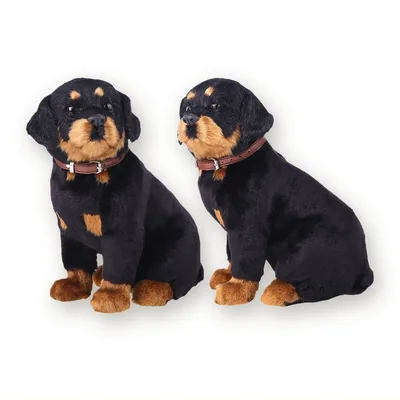
Specialisation matters. A plush factory rarely makes good wooden toys, and a die-cast plant does not sew backpacks. A full toy range usually means several partner factories.
4. Compare quotes on delivered cost
Send every supplier the same specification and ask for:
- price per piece or set, and the MOQ per model and colour;
- age grade proposed by the manufacturer;
- packaging type (polybag, colour box, window box, display box), inner pack and carton size;
- gross weight per carton;
- available test reports and the date of each report;
- production time and payment terms.
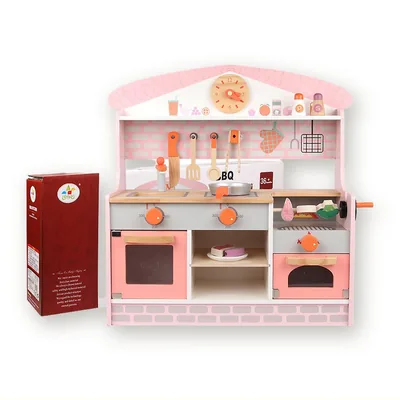
Toys are often light but bulky. Play tents, dollhouses, rocking horses and large plush take volume, so the lowest unit price can become the most expensive delivered product once freight is added.
5. Check samples as a buyer and as a safety officer
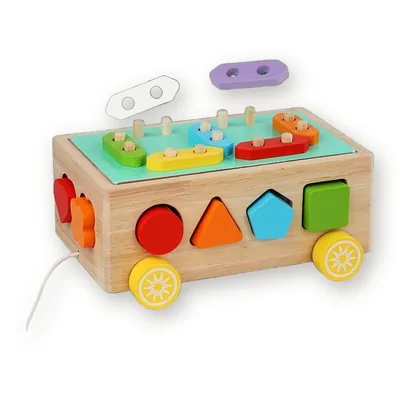
Open the sample as a child would. Pull eyes and noses on plush, twist wheels on cars, look for sharp edges and splinters on wooden toys, smell the paint, and check that small pieces are absent from anything aimed at toddlers. Compare the sample with the photos in the test report: same materials, same colours, same parts.
Keep one approved sample as the reference for production and inspection. Our samples page explains how sample costs are credited against the order.
6. Get the documents before you pay the balance
Under the Toy Safety Directive 2009/48/EC the manufacturer carries out the conformity assessment, draws up the technical documentation and the EU declaration of conformity, and affixes the CE marking. As importer you must check that this has been done before the toy goes on the market. In practice, ask for:
- the EU declaration of conformity for each model;
- EN 71 test reports covering the parts that apply (often EN 71-1, -2 and -3);
- REACH declarations or test reports where the material requires them;
- label and packaging artwork with CE marking, warnings, age grade, batch number and addresses.
Read the reports, do not only collect them. Our toy safety page covers what to look for.
7. Agree terms in writing
The contract should hold the specification, materials, packaging, labels, warnings in each language, delivery date and quality standard. If you add your brand, approve a pre-production sample and the final artwork before mass production starts. Payment for toys is usually a deposit of 30–50 % with the balance before shipment.
8. Inspect before the goods leave the factory
Fixing a toy in Europe is slow and expensive, and relabelling thousands of boxes is worse. A pre-shipment inspection checks quantity, workmanship, function, packaging and labels on a statistical sample (AQL). For toys, add simple on-site checks: small-parts cylinder on toddler items, seam pull on plush, barcode scan, and a look at the warnings on the box. Pay the balance only after you have seen the report.
9. Choose the transport
Sea freight usually suits bulky orders, rail is a middle route for mixed loads, and air is for samples and urgent light goods. Allow for factory holidays in late January–February, when production stops for several weeks, and for space filling up on the routes before them.
10. Customs, duty and VAT
The importer of record files the import declaration, pays customs duty according to the tariff code of each product, and pays import VAT. You need an EORI number. Toys, games, children’s bags and party items fall under different codes, so check each one before you calculate your margin.
11. Put your name on the toy
The importer’s name, registered trade name or trade mark, and postal address must appear on the toy, or where that is not possible on its packaging or a document that accompanies it. Many first-time importers forget this and discover it when the goods are already printed. Add a type or batch number, the CE marking and the warnings in the language of each country of sale.
Costs at a glance
| Cost item | What drives it |
|---|---|
| Product price | Model, materials, quantity, packaging |
| Set-up for logo or custom packaging | Print plates, embroidery programs, moulds |
| Testing | New or changed designs without a valid EN 71 report |
| Inspection | Number of models and the AQL level |
| Freight | Carton volume and weight, mode of transport |
| Duty and import VAT | Tariff code and customs value |
| EPR registrations | Countries where you place packaging and toys on the market |
The alternative
If you would rather not be the importer, buy through an EU importer. You get an EU invoice, checked documents and a delivered price. That is what we do: toys are supplied with the manufacturer’s EN 71 test reports on request, and we check the documents before shipment. Send us your product list and compare our offer with your own calculation.