Why age grading comes first
The age grade is not a marketing choice. It decides which safety requirements apply. Toys intended for children under 3 must not contain small parts, must withstand stricter abuse tests and have tighter rules for cords, fillings and detachable components. A toy for children from 3 years has more freedom in design, but then needs the right warning if a younger child could be harmed by it.
The manufacturer sets the age grade as part of the safety assessment, using the design, the play value and how children of a given age actually play. European guidance on age determination exists for this purpose. As buyer, you check that the grade is plausible and that the packaging, listing and test report all show the same grade.
Signs that a toy is meant for under-3s
Some features tell the authorities that a toy is intended for very young children, whatever the box says:
- soft, simple shapes and bright colours designed for grasping;
- rattles, teethers, activity cubes and pull-along toys;
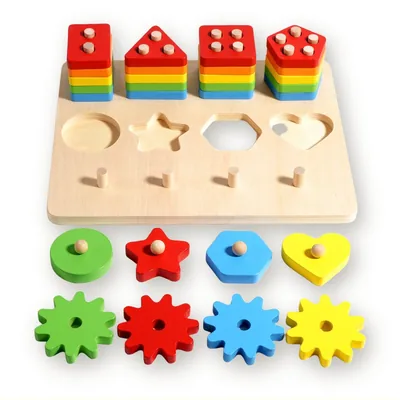
- soft books, stacking cups and rings, play mats;
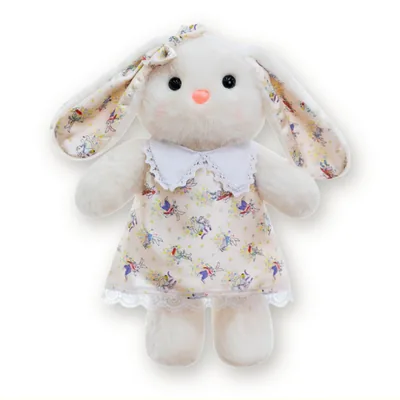
- plush toys of a size and softness that suits a cot or a pram;
- large, simple pieces with little play value for older children.
Such a toy cannot escape the small-parts rule by printing a warning on the box. If a product is obviously intended for under-3s, it must be designed for them. In our own catalogue we leave out toys with small parts intended for children under 3, and our baby and toddler range is built around that policy.
The under-3 warning
Toys that could be dangerous for children under 36 months and are not intended for them carry a warning such as “Not suitable for children under 36 months” or “Not suitable for children under three years”, or the equivalent pictogram. The warning must be completed by a brief indication of the specific hazard, for example “Small parts” or “Long cord”. The hazard can appear in the instructions, but the warning itself must be visible at the point of sale.
Typical toys that carry it:
- jigsaw puzzles, board games with dice and counters, dominoes;
- bead, pixel and sand-art kits, air-dry clay sets;
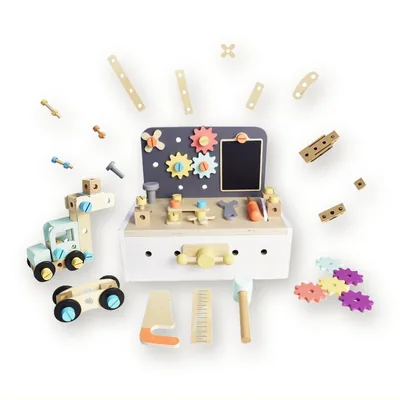
- die-cast cars with small parts, take-apart vehicles with screws;
- dolls with accessories, dollhouse furniture;
- small animal figures and party favours.
Specific warnings for certain toy types
The Toy Safety Directive lists specific warnings for some categories. The exact wording is set in the Directive and translated in each language; check it against the current text before printing. The ones we see most often in our ranges:
| Toy type | Warning in substance | Our categories |
|---|---|---|
| Not for under-3s | Not suitable for children under 36 months, with the hazard | Puzzles, crafts, vehicles, favours |
| Activity toys | For domestic use only; assembly and maintenance instructions; adult supervision where relevant | Swing and slide sets, rockers, basketball stands |
| Aquatic toys | Only to be used in water in which the child is within its depth and under supervision | Inflatables, dive rings, pool games |
| Functional toys | To be used under the direct supervision of an adult | Some role-play tools and kitchen items |
| Toys in food | Toy inside; adult supervision recommended | Promotional sets in food packaging |
| Toys attached to cots or prams | Instructions on fixing and removal as the child grows | Not in our catalogue |
Aquatic toys deserve one extra line: an inflatable toy is not a swimming aid, and neither the packaging nor the listing should suggest otherwise. Swimming aids are a different product type and follow different rules.
Warnings must be in the right language and place
Warnings and safety information must be in a language easily understood by consumers in the country of sale. For a box sold in Germany, Austria and Switzerland that means at least German, plus French and Italian where it is sold in those parts of Switzerland. For Poland, Polish. Warnings that affect the decision to buy, such as minimum or maximum age, must be on the consumer packaging or otherwise visible before purchase. That also applies online, where the warning must be visible in the listing before the order is placed.
Toys that look like food
Play food, tea sets and food-shaped erasers or squeeze toys are popular. The risk comes when a toy imitates food so closely that a child might put it in the mouth. Products that resemble food are also covered by separate EU rules on food imitations. We avoid products that imitate food in a way that could mislead children, and we check play food for size and shape. See our role play range for what we list.
A practical routine for buyers
- Compare the age grade on the sample box, the test report and the supplier’s product data.
- Ask whether the toy has small parts, cords, magnets or batteries; each changes the warnings.
- Collect the warning text for every language you sell in before artwork is printed.
- Put the same age grade and warnings into your online listings.
- For private label, approve the final artwork with warnings, not only the logo.
How we handle it
We check age grading and warnings in the language of each country of sale before the goods ship. For private-label orders we prepare multilingual warning blocks with the packaging artwork. Toys are supplied with the manufacturer’s EN 71 test reports on request, and we check the documents before shipment. More on our approach is on the toy safety page.